
The Morning It Won't Move
You hit the wall button or the remote, and instead of the usual smooth roll-up, the door groans, jerks, or just sits there while the opener motor strains and clicks. Or it opens maybe six inches, stops, and reverses. Sometimes the bottom edge looks like it's actually gripping the concrete, like something is holding it down. This tends to show up on the first genuinely cool mornings of the season, after months of triple-digit heat, and it throws people off because nobody expects a desert garage door to act like it's iced over.
The Symptoms Worth Paying Attention To
- The door feels noticeably heavier when you try to lift it manually
- The opener motor runs longer than normal or strains before the door moves
- A grinding, squeaking, or scraping sound comes from the tracks or hinges on startup
- The bottom seal looks stuck flush to the slab, especially after a cold, still night
- The door opens fine by afternoon but struggles again the next cool morning
- The remote works inconsistently but the wall button works fine, or vice versa
None of these on their own means something is broken. But together they point to a handful of causes, and a technician works through them in a specific order because the cheapest, most common fix is usually at the bottom of the door, not inside the opener.
First Check: The Bottom Seal and the Slab
Cool desert nights drop the temperature of a concrete garage floor faster than the air around it, and that temperature difference causes condensation to form right where the rubber weatherstrip meets the slab. Overnight, that moisture can let the seal sit flush enough against the concrete that it feels glued down, especially if the rubber has gone stiff and brittle from a summer of UV exposure and heat. The fix here is simple: a technician checks the seal for cracking or flattening and replaces it if it's lost its flexibility, since old brittle rubber grips the floor far more than a supple one does. If the seal itself is fine, sometimes the answer is just breaking that moisture bond gently with a flat tool rather than forcing the opener to do it, which saves the rollers and track from unnecessary strain.
Second Check: Lubricant That Baked Out Over Summer
This is the big one in this climate. Months of extreme heat don't just fade paint and crack rubber — they also cook lubricant right off the rollers, hinges, and track. Grease and oil thin out and run or evaporate in high heat, leaving metal-on-metal contact that was masked all summer because warm metal moves more freely even when dry. Drop the temperature twenty or thirty degrees overnight and that same dry hardware suddenly binds, squeaks, and resists. A technician checks every hinge, roller stem, and the full length of both tracks for this kind of dry, chalky residue or visible rust specks. The fix is a full relube with a garage-door-rated lithium or silicone lubricant — not household oil, which attracts dust and grit and turns gritty fast in a dusty desert garage. This is also the point where worn rollers get flagged, since a dry roller that's already egg-shaped or cracked won't be fixed by lubricant alone and needs swapping.
Third Check: Spring Tension in Cooler Air
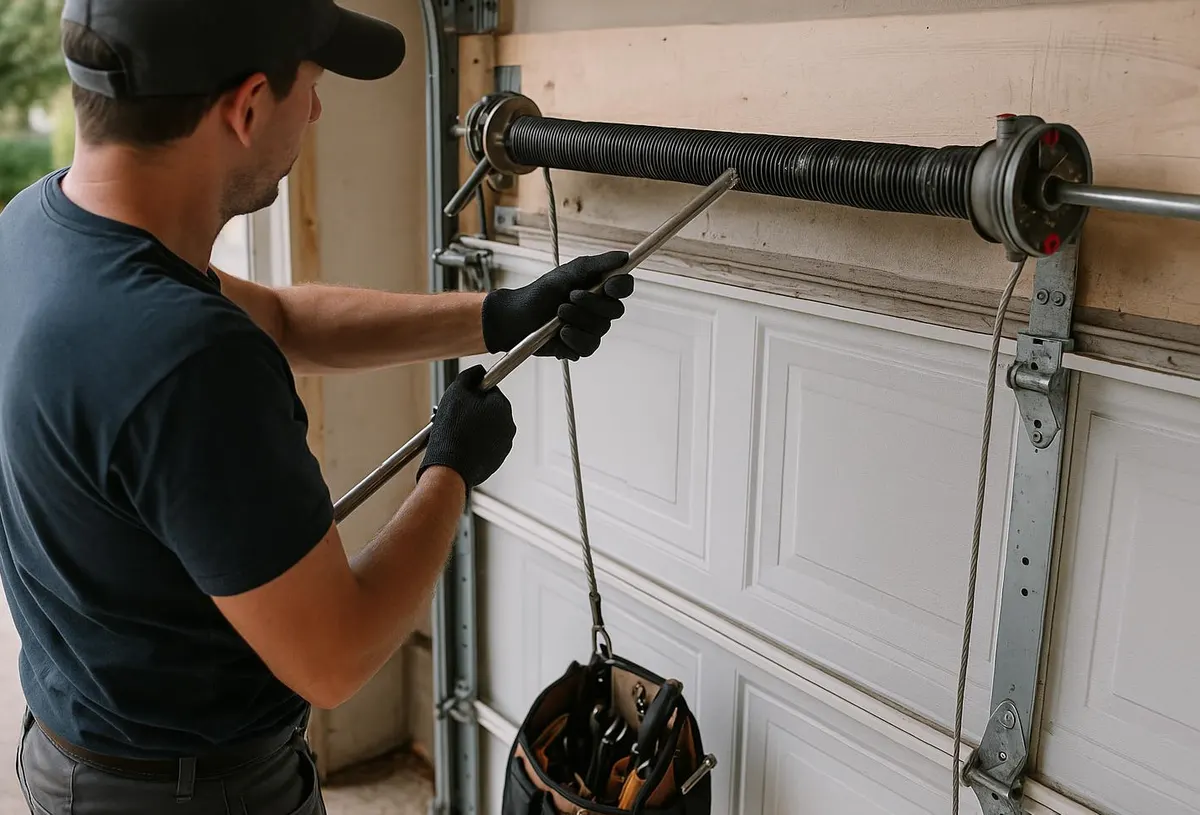
Torsion and extension springs are steel, and steel contracts slightly as it cools. On a door that's already running close to its tension limit — common on older doors or ones that have never been rebalanced — that slight contraction is enough to make the door feel heavier and the opener work harder to compensate. A technician checks this by disconnecting the opener and manually lifting the door partway to see if it holds position on its own. If it drops or feels heavy in hand, that's a tension issue, not a lubricant issue, and it points toward adjustment or replacement rather than a quick oiling. This is also where a tech looks for stretched cables or stripped rubber on extension spring doors, since those weaken gradually and show their limits exactly when the metal is least forgiving — in the cold.
Last Check: The Opener, Sensors, and Remote
If the door moves fine by hand but the opener still struggles or reverses, the issue shifts electrical. Cold mornings are hard on remote batteries, which lose a bit of voltage in lower temperatures and can cause intermittent signal strength. A technician checks battery output, the travel-limit and force settings on the opener (which may need adjusting if the door has gotten physically heavier from any of the issues above), and the safety sensors near the floor, since dust kicked up by monsoon season or blown in overnight can film over the sensor lenses and cause false reversals that have nothing to do with temperature at all.
When to Call North Las Vegas Garage Door Service
If you've cleared the seal, the door still feels heavy or makes grinding noises even with fresh lubricant, or the opener is straining and reversing unpredictably, it's time to get a second set of hands on it. We handle this exact seasonal pattern constantly across North Las Vegas, Aliante, and Centennial Hills, where summer heat and cool desert nights put hardware through a real swing every year. Our garage door maintenance visits cover a full lube, hardware inspection, and balance check before winter settles in, and if the issue turns out to be spring tension, our spring replacement service gets it rebalanced safely rather than left to wear further. We also handle opener repair and installation if the electronics are the real culprit.
If your garage door is fighting you on cool mornings, call North Las Vegas Garage Door Service today and get it sorted before it turns into a bigger repair.